



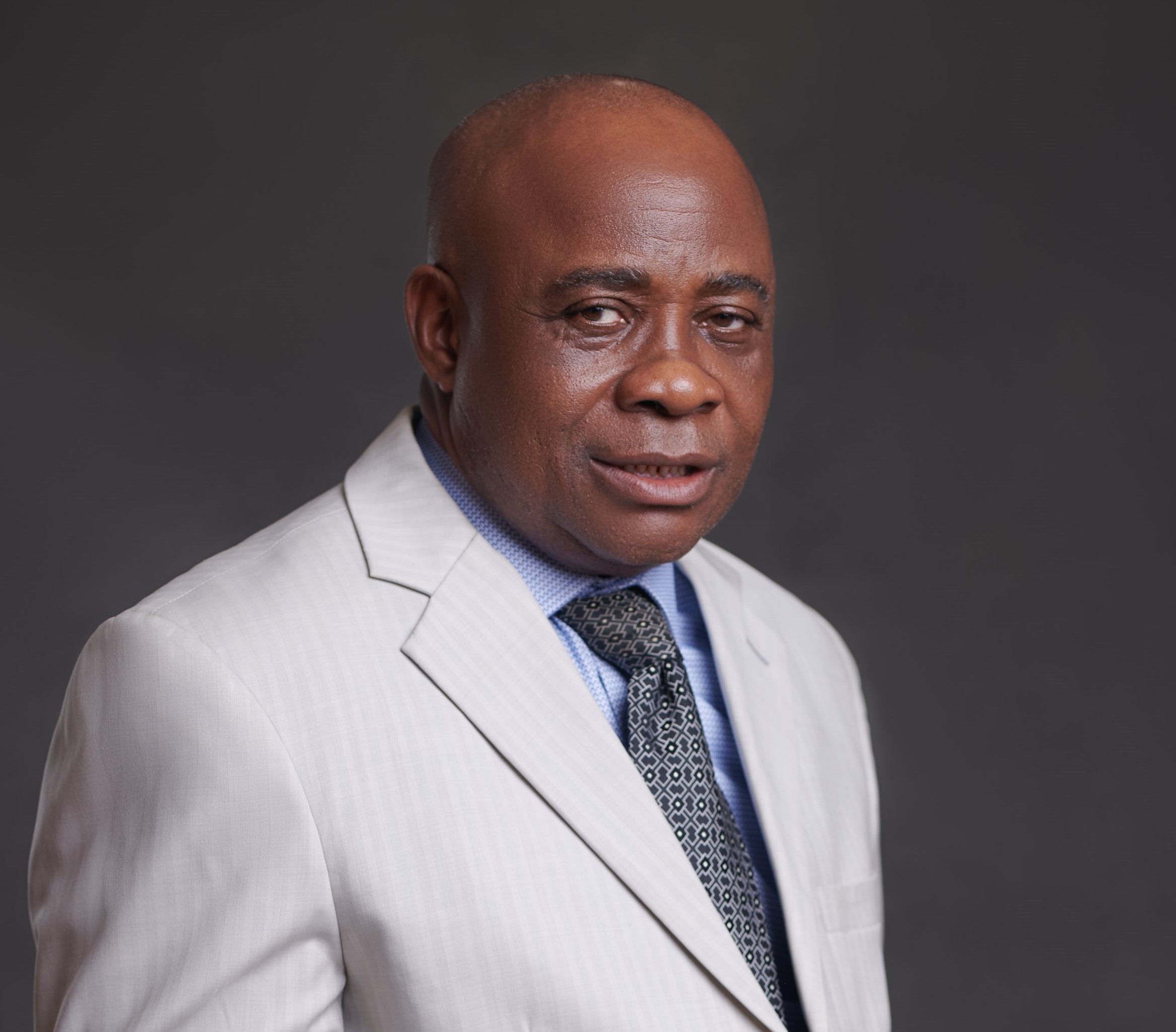
Dr Chris Okwudili Ndibe, a Free Trade Zone Consultant, has advised that the Finance Bill 2027 is an opportunity which Free trade Zone stakeholders should not allow to pass.
The Researcher and Author said in a statement if we do not participate when the rules are being written, we should not complain when the rules become difficult to operate.”
The Federal Ministry of Finance has called for public inputs into the Finance Bill 2027, inviting businesses, investors, professional bodies, institutions and other stakeholders to propose amendments aimed at improving Nigeria’s fiscal laws, competitiveness and economic governance.
For those of us in Nigeria’s Free Trade Zone (FTZ) ecosystem, this should not be treated as another government announcement. It is a call to action.
For years, operators, developers, enterprises and investors in our Free Zones have complained about taxation uncertainties, conflicting interpretations of fiscal incentives, multiple demands by government agencies, Customs-related fiscal issues, policy inconsistencies and other financial bottlenecks that reduce the attractiveness and competitiveness of the scheme.
Here is an opportunity to put those concerns formally before government.
We should use it.
Nigeria established Free Trade Zones to create specially administered environments in which businesses can manufacture, process, export, create employment, attract investment and compete internationally.
But a Free Zone cannot achieve these objectives if investors continually face uncertainty over the fiscal rules governing their operations.
The fundamental principle of a Free Zone is not merely the provision of land or infrastructure. It is the creation of a predictable, competitive and administratively efficient business environment.
This is particularly important for Nigeria, where businesses already contend with infrastructure deficiencies, high energy and logistics costs, foreign-exchange challenges, administrative delays and numerous regulatory bottlenecks.
The FTZ fiscal framework should therefore compensate for these disadvantages rather than add another layer of uncertainty.
I respectfully call upon NEPZA, OGFZA, Free Zone developers and operators, licensed Free Zone enterprises, investors, the Nigeria Customs Service, professional tax advisers, manufacturers, financial institutions, FTZ consultants and other stakeholders to study the invitation for submissions to the Finance Bill 2027 carefully.
We should identify provisions in Nigeria’s fiscal and tax framework that presently create uncertainty, duplication, conflict or unnecessary costs for Free Zone investment.
Among the matters deserving serious examination are:
- clarity and certainty regarding the tax treatment of licensed Free Zone enterprises;
- the relationship between Free Zone legislation and subsequent tax and finance legislation;
- VAT and other tax treatment of transactions involving Free Zones, the Customs Territory and international markets;
- withholding-tax and corporate-tax issues affecting Free Zone transactions;
- treatment of imports, exports, duties and levies involving Free Zone enterprises;
- elimination of multiple or overlapping fiscal demands by federal, state and local authorities;
- protection of legitimately granted incentives and greater certainty for long-term investors;
- clearer rules governing transactions between Free Zone enterprises and businesses in the Customs Territory;
- harmonisation of the fiscal provisions affecting NEPZA- and OGFZA-regulated zones;
- simple and predictable dispute-resolution mechanisms for FTZ-related tax matters; and
- ensuring that future fiscal legislation does not inadvertently undermine the objectives for which the Free Zone scheme was established.
But we should go beyond listing our complaints.
The Ministry has specifically encouraged contributors to identify the law and provision requiring amendment and propose actual drafting language.
That means our intervention must be professional, evidence-based and solution-oriented.
WE NEED A COORDINATED FTZ POSITION
This is where I believe the industry must rise to the occasion.
Rather than developers, operators and enterprises making isolated submissions alone, the major stakeholders should consider developing a consolidated FTZ memorandum on the Finance Bill 2027.
NEPZA and OGFZA should provide leadership. Developers, operators and enterprises should bring forward the practical problems they encounter. Tax and legal professionals should translate these problems into precise legislative proposals. Customs and other relevant agencies should contribute towards workable administrative solutions.
Where stakeholders have different views, those differences can be identified and debated.
The objective should be simple:
What fiscal framework does Nigeria require for its Free Trade Zones to compete successfully with zones in countries such as Morocco, the UAE, Mauritius, Egypt and other serious investment destinations?
We must remember that investors compare jurisdictions.
Capital does not invest because a country declares an area a Free Trade Zone. Capital goes where the combination of infrastructure, market access, policy stability, fiscal certainty, regulatory efficiency and investment protection makes business commercially viable.
THIS OPPORTUNITY SHOULD NOT PASS US BY
We cannot continuously complain about the fiscal problems confronting Nigeria’s Free Trade Zone scheme and remain silent when government formally invites us to propose solutions.
This is the time for the FTZ community to speak.
Let every Zone examine its experience.
Let every enterprise identify the fiscal bottlenecks affecting its operations.
Let developers and operators document the investments that have been delayed or discouraged by uncertainty.
Let NEPZA and OGFZA coordinate the regulatory perspective.
Let our tax and legal experts convert these experiences into specific amendments.
And, most importantly, let us develop a strong, coherent and evidence-based Free Trade Zone position for the Finance Bill 2027.
The deadline is Friday, 11 September 2026.
The time is short.
If we want Nigeria’s Free Trade Zones to operate differently, we must participate when the laws governing the business environment are being shaped.
Let us not allow this opportunity to pass and later return to the same complaints.
The Finance Bill 2027 provides an opportunity to remove some of the financial and taxation bottlenecks affecting the Nigerian Free Trade Zone scheme.
FTZ stakeholders: let us wake up, organise, engage and make our voices count.
Dr. Chris Okwudili Ndibe
Free Trade Zone Consultant, Researcher & Author.