



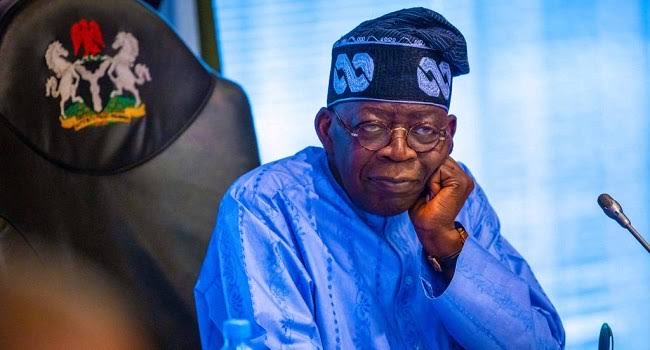
One of Nigeria’s notable policy research groups, the Independent Media and Policy Initiative (IMPI) has said that there was no way President Bola Tinubu could have retained subsidy on petroleum upon assuming office on May 29, 2023 without breaching provisions of the law.
It stated that the President’s ‘subsidy is gone’ pronouncement was simply an affirmation of the reality of the Petroleum Industry Act (PIA) of 2021 which abolished government intervention in the downstream oil sector with effect from June 2023.
In a policy statement signed by its Chairman Dr Omoniyi Akinsiju, IMPI argued that any delay in announcing the situation would have created room for a bigger problem for the new administration.
IMPI said: “Our research showed that President Tinubu’s explicit, unscripted declaration during his inaugural address served as a decisive policy signal to close the transition window and eliminate administrative ambiguity. This is because a delayed or staggered announcement would have triggered speculative hoarding by marketers, artificial scarcity, and cross-border diversion as operators rush to exploit the remaining subsidized inventory.
“Therefore, by ending the subsidy on day one, the administration signalled to international financial markets, rating agencies, and domestic stakeholders that Nigeria was committing to long-term structural reforms. We have seen the result in the endorsement of the national economy by virtually all global and domestic rating agencies and multilateral institutions.
“While the immediate declaration effectively ended under-recovery deductions from the Federation Account, the administration subsequently rolled out a sequence of structural and social mitigation policies.
“These policies include the Presidential Compressed Natural Gas Initiative (PCNGi), launched to establish a cheaper, domestic alternative to petrol for mass transit and commercial transportation to mitigate the direct impact of high PMS prices on commuters.
“The immediate termination of subsidy deductions unlocked significant monthly allocations at the Federation Account Allocation Committee (FAAC), doubling and tripling revenue distributions to State and Local Governments to fund local social safety nets and infrastructure.
“At the same time, the administration introduced temporary wage awards for public sector workers, followed by the enactment of a new national minimum wage and targeted conditional cash transfer programmes for vulnerable households.
“The administration prioritized bringing domestic mega-refining capacity online, culminating in the rollout of the naira-for-crude policy to decouple domestic refining feedstock from foreign exchange conversion bottlenecks.”
In analyzing the new position of the Presidential candidate of the African Democratic Congress (ADC) Atiku Abubakar and his Nigeria Democratic Congress (NDC) counterpart, Peter Obi, on the return of fuel subsidy, the think tank described it as a dangerous populist move.
“At different fora, over the past two months, Atiku had proposed a model requiring the state to supply crude oil to local refineries at discounted or fixed below-market rates, framing it as a benign ‘production subsidy.’ We, however, categorize this proposal as a dangerous populist deception designed to mask a massive fiscal drain under the guise of local industrial support.
“Apparently, the proponents of the ‘restore subsidy policy’ suffer a brazen misunderstanding of the ownership structure of crude oil produced in the country. Policy proposals that promise cheap energy through state-mandated crude discounts are economically unsustainable. They rest on the false premise that the state has unlimited, unencumbered crude oil it can give away without consequence.
“The fact is that out of Nigeria’s total gross crude oil output (averaging between 1.35 million and 1.65 million barrels per day), the total physical crude that directly accrues to the Nigerian State (via NNPC Limited and NUPRC) is approximately 800,000 to 1,000,000 barrels a day, representing 55% to 65% of national production,” the policy group added.
end