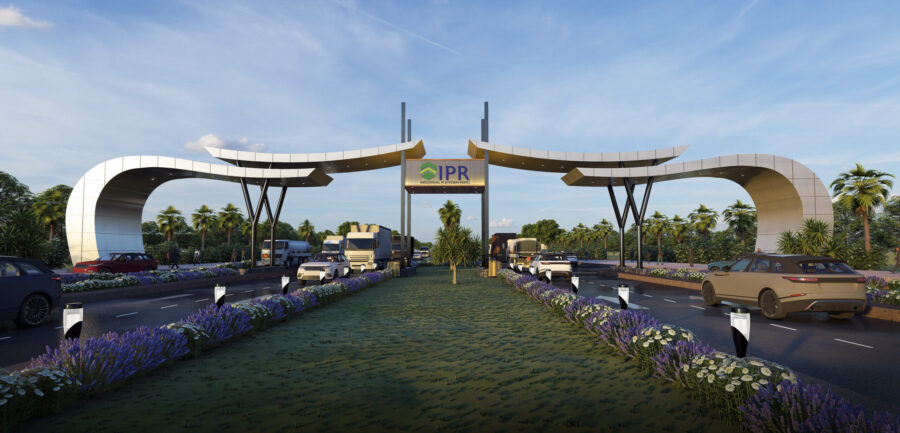
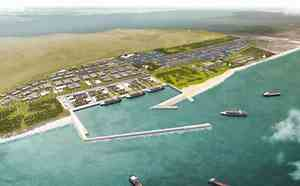
The Nigeria Export Processing Zones Authority (NEPZA) has again boosted the country’s manufacturing and export indexes with the licencing of Abuja Industrial Park (ZEBERCED) Free Zone with initial 150 million US dollar investment portfolio.
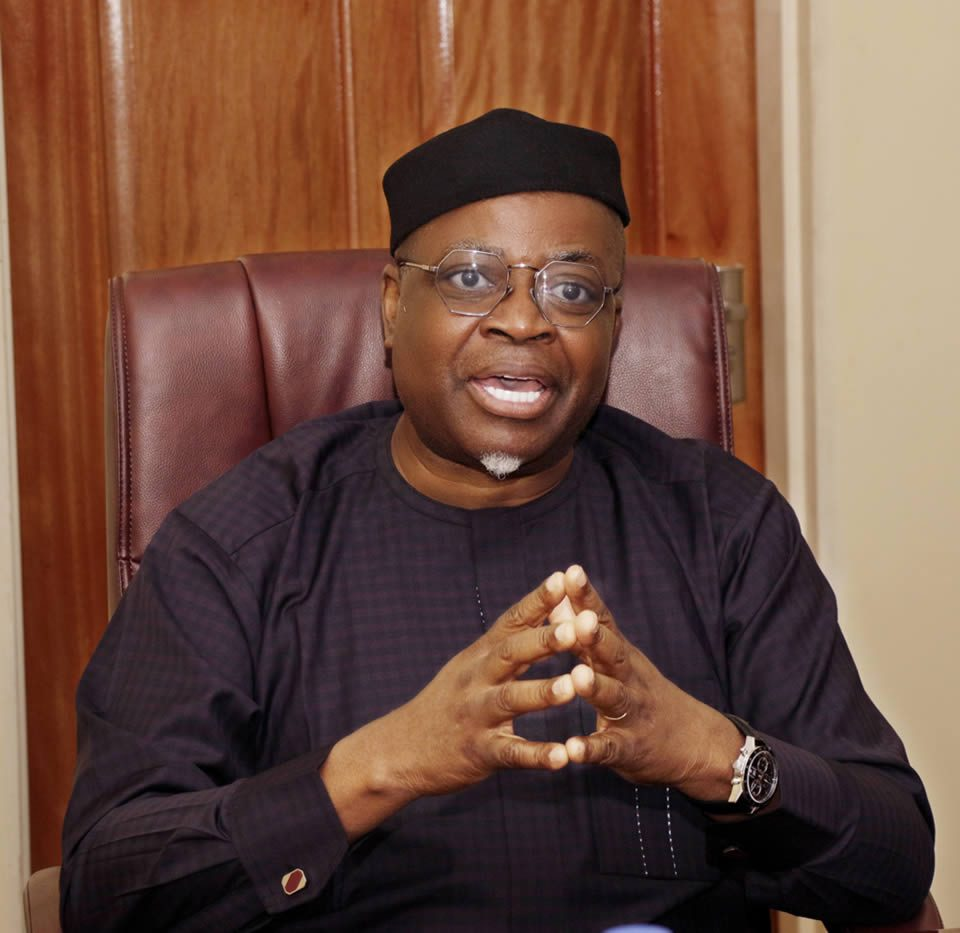
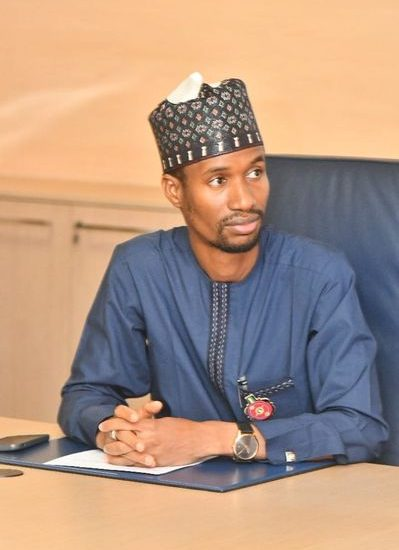
Dr Olufemi Ogunyemi, Managing Director of NEPZA, in a remark, while handing over the Operating Licence to the Turkish owners of the private zone, revealed that the new business ecosystem sitting on 250 hectares would be home to over 170 factories and to generate 40,000 employment.
Dr. Ogunyemi, also the Chief Executive Officer of the Authority further explained that the zone which would be located in Idu Industrial layout Phase IV had the capacity to greatly impact the nation’s economy through sustained export of manufactured goods.
“Today marks another excellent moment for us in the Authority as we continue to deliver on our mandate of managing the Free Trade Zone scheme in line with the Federal Government directive.
“This latest Abuja Industrial Park Free Zone will change the business configuration of the Federal Capital City and spur the landscape for global export competitiveness and to boost the country’s employment index.
“Let me congratulate those behind this loft project and encourage other local and international players to explore the country’s free zone scheme as it offers some of the best global incentives,’’ Dr Ogunyemi said.
Mr. Adil Kurt, Managing Director, Abuja Industrial Park (ZEBERCED) Free Zone, expressed satisfaction with the one-stop-shop policy of the government that sped up the registration process, adding that the zone would be the ideal hub for manufacturing and export.
Coyol Free Zone has consistently been recognized in global rankings over the past 17 years
Coyol Free Zone is recognized for its exceptional performance across several areas of Free Trade Zone Park Regime development and management.
We are consistently awarded for the innovation of our Real Estate developments, our leadership in the Life Sciences field, and our role as a hub for specialized
This year we have been awarded by fDi Intelligence, in the following categories:
Our secret? International entities like fDi Intelligence, The European, Global Alliance of Special Economic Zones (GASEZ), and Investment Monitor have outlined several key points:
Judges from international organizations were particularly impressed by our education initiatives, as we aim to harness the dynamism of the Life Sciences sector to provide high-quality employment opportunities for Costa Ricans.
We collaborate closely with local governments, and private and public educational institutions, to enhance the skills of the workforce. Our program, ‘Intégrate a Coyol’, and the Dual Education initiative supported by the Costa Rican government, are designed to bridge the gap between traditional education and the requirements of the modern industry.
Coyol Free Zone operates a social responsibility program, which runs an annual accountability system aligned with the UN Sustainable Development Goals (SDGs).
In May of this year, the Global Alliance of Special Economic Zones (GASEZ) included our Park as one of the 50 model free zones for sustainability, recognizing our efforts to fulfill the Sustainable Development Goals (SDGs) and intensify measures to achieve the Global Sustainability Agenda 2030.
Many of our efforts for the SDGs include protecting biological corridors, engaging in reforestation activities, implementing sustainable construction under LEED standards, managing construction waste responsibly, and promoting the use of green energy and renewable resources.
We also manage a sustainable transportation system that reduces commute times and minimizes the use of fossil fuels.
Our Park is located just five miles from Juan Santamaría International airport and close to Costa Rica’s most important container ports, while the proximity of the country to the United States makes it great placed for nearshoring opportunities.
Costa Rica is also an attractive investment destination due to its political stability, longstanding legal security, and outstanding human talent.
Coyol Free Zone is focused on Life Sciences and Smart Manufacturing, and it plays a key role in Costa Rica’s position as a global hub for Medical Devices, pharmaceuticals, and biotechnology.
Our Park is home to renowned global companies, such as Medtronic, Abbott, and Bayer, among other firms, which are leaders in their respective industries.
Through a diverse range of multinational corporations and international small and medium-sized enterprises, we have cultivated a thriving on-site ecosystem of suppliers and contractors.
Our Park’s leadership in Medical Devices and Smart Manufacturing, convenient location, and attractive benefits make it an ideal hub for companies seeking international market expansion.
Seven of the companies located in Coyol Free Zone have become globally recognized as leaders in the medical device manufacturing sector, according to the 2023 Top 30 Global Medical Device Companies by MPO.
The companies based in our Park also account for more than 50% of Medical Device exports in Costa Rica under the manufacturing segment.
Coyol Free Zone has consistently been recognized in global rankings over the past 17 years due to its commitment to innovation and sustainable development.
Such recognition is a result of its success in attracting investments and reinvestments, high value-added exports, productive links with local companies, and the creation of employment opportunities in the country.
Landmark partnership to strengthen economic ties and foster cross-border opportunities between Ras Al Khaimah and China has been struck by Khaimah Economic Zone (RAKEZ) and China’s Tianjin Pilot Free Trade Zone (Tianjin FTZ).
The business relations were formalised through a Strategic Cooperation Agreement with China (Tianjin) Pilot Free Trade Zone and a Memorandum of Understanding (MoU) with Tianjin Port Free Trade Zone.
The Strategic Cooperation Agreement was signed by Zhu Changcun, Director-General of the CC Office of China (Tianjin) Pilot Free Trade Zone Administration, and Ramy Jallad, Group CEO of RAKEZ.
Additionally, Jallad signed an MoU with Xu Haitao, Director of the Investment Promotion Bureau at the Tianjin Port Free Trade Zone Administrative Committee
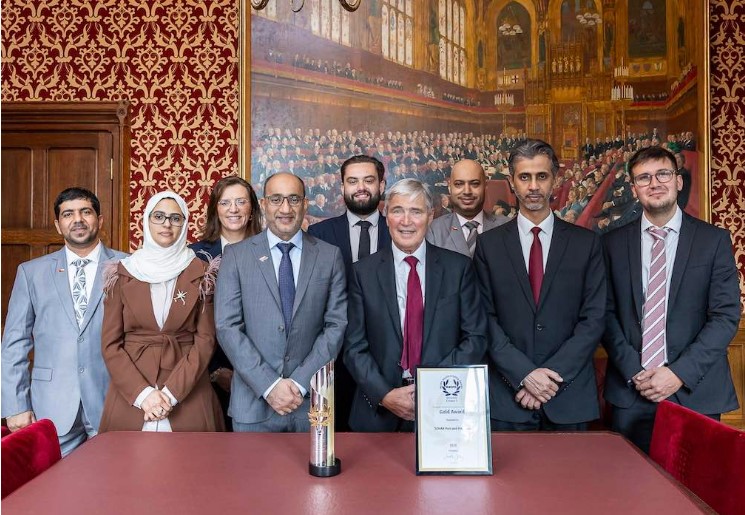
London, May 19, 2024 – In an exceptional celebration of excellence and recognition at the iconic House of Lords, SOHAR Port and Freezone has received the RoSPA’s Best New International Entry Award, and the RoSPA’s Gold Sector Award for Health and Safety performance for the period of January 2023 to December 2023 by Lord Bill Jordan, Life President of the Royal Society for the Prevention of Accidents (RoSPA).
RoSPA is a not-for-profit organization patroned by His Majesty King Charles III, King of the United Kingdom that has worked for more than 100 years to exchange life-enhancing skills and knowledge to reduce serious accidental injuries. The esteemed RoSPA Awards program is celebrating its 68th year as the UK’s largest and most impactful health and safety program. With almost 2,000 entries annually from over 50 countries, impacting over seven million employees, they offer a platform to spotlight an unwavering commitment to continuous improvement and excellence in health and safety.
Commenting on this achievement, Omar bin Mahmood Al Mahrizi, CEO of SOHAR Freezone and DCEO of SOHAR Port, said, “We are honored to receive the Gold Award for Health and Safety 2023 and the Best New International Entrant Award from RoSPA. This recognition reflects our team’s and tenants’ dedication and efforts to ensure a safe and healthy work environment. It strengthens our commitment to improving standards, enhancing safety culture, and developing best practices for all stakeholders. We are proud to be part of the international awards community, setting a standard for safety and occupational health excellence.”
Rebecca Hickman, CEO of the Royal Society for the Prevention of Accidents (RoSPA), expressed her delight in welcoming Sohar Port and Freezone to society. Hickman commended SOHAR Port and Freezone’s exceptional commitment to safety excellence and their efforts to promote a safety culture among the companies within the port and freezone.
In line with this achievement, SOHAR Port and Freezone has signed an MOU agreement with RoSPA to collaborate on occupational safety training and the exchange of expertise. This partnership aims to enhance safety standards and boost operational efficiency, establishing SOHAR Port and Freezone as a benchmark in this field.-Ends-
About SOHAR Port and FreezoneAs one of the world’s most rapidly growing integrated industrial and logistics projects, SOHAR Port and Freezone capitalizes on its strategic location to cement its status as a crucial logistics hub in the region and globally. A unique collaboration between the Port of Rotterdam and ASYAD Group marks it as a key mega-project in Oman, offering a range of services including logistics, petrochemicals, metals, and the region’s first dedicated agro-terminal. With 20 over years of operation, SOHAR is the main gateway for Oman’s import and export, contributing 2.1% to the nation’s GDP and creating almost 26,000 jobs. Committed to sustainable development and advanced technology, SOHAR is modernizing logistics infrastructure in line with the economic diversification goals of Oman’s 2040 Vision. For more information on SOHAR Port and Freezone, visit soharportandfreezone.com
From Dr. Akinwumi Adesina CON; President of the African Development Bank Group, to Ngozi Okonjo-Iweala GCON; Director General of the World Trade Organisation, to Hon. Dr. Doris UzokaAnite MD, CFA; Nigerian Minister of Industry, Trade, and Investment, to Sergio Pimenta; Regional Vice President for Africa at the International Finance Corporation, the message is clear: an industrial revolution is crucial for Nigeria’s overall transformation.
Our national focus on economic development has become imperative, and industrialisation is emerging as a compelling strategy for sustainable growth and inclusive fiscal prosperity.
This is reinforced by our country’s abundant endowment of a labour surplus, scarce raw materials, growing consumer markets, and an economy in dire need of diversification.
With industrialisation as the desired outcome, prominent among effective approaches is the establishment of Free Zones.
A Free Zone (FZ), also referred to as a Special Economic Zone (SEZ), Foreign or Free Trade Zone (FTZ), Enterprise Zone (EZ), Industrial Development Zone (IDZ), or Export Processing Zone (EPZ), is a geographically defined area offering differentiated legal and regulatory framework compared to the rest of the nation, specifically designed to enhance investment attractiveness. By addressing weaknesses in the broader business environment, FZs aim to compensate for potential risks and create a more conducive climate for foreign direct investment (FDI).
Policy goals of FZs include export promotion by providing a duty-free platform for calculated importation of raw materials and machinery, as well as tax breaks for the export of finished products. They also target import substitution by increasing domestic production to reduce attendant reliance, and job creation, through attraction of businesses that generate employment opportunities within the zone. In addition, FZs facilitate foreign direct investment to leverage capital and technology transfer.
The Nigerian Export Processing Zone Authority (NEPZA) lists permissible activities in FZs as construction and light manufacturing; solid minerals & metals; oil & gas; and agribusiness & agro-allied, covering various industries: from electronics to textile, to plastics, to cosmetics, pharmaceutical products, food processing, and more.
Building and maintaining the highest quality infrastructure within Free Zones demands substantial investment in logistics networks, operations and maintenance utilities, warehousing and distribution facilities, as well as communication technology. Businesses need a clear and predictable regulatory environment, accordingly, streamlined bureaucratic processes and consistent implementation of regulations are crucial. Perhaps the most pressing challenge lies in equipping its workforce with skillsets needed to thrive in these dynamic zones. Investing in technical and vocational education programs will be essential to ensure a talent pool that can meet the required demands.
The Nigeria Export Processing Zones Authority (NEPZA) has stated it will offer startups and foreign businesses operating in free trade zones tax breaks, customs duties waiver and other incentives as part of measures to stem the growing tide of foreign business exit in the country.
The Managing Director of NEPZA, Olufemi Ogunyemi told the News Agency of Nigeria (NAN) that it was supporting businesses within its free trade zones and enclaves.He said, “This initiative aims to reduce production costs and incentivise companies to maintain operations in Nigeria. We offer a range of incentives designed to attract and retain foreign direct investment.
“These incentives include customs duty waivers, tax breaks, and deferred payments to the government at the start-up phase of businesses,’’
Offer of innovative power solutionsHe further decried the exit of multinationals and closure of businesses across the country and stated that part of Authorities’ plan includes addressing concerns raised by these companies such as increased power cost by offering innovative solutions tailored to business needs.
He noted that in exchange for these business reliefs, companies would be mandated to train Nigerians sometimes to professional level through CSR activities which he described as ‘Community Social Regeneration’.
In his words, “We are witnessing an unfortunate trend where companies are relocating due to issues like foreign exchange access and power supply. To mitigate these challenges, NEPZA is actively involved in providing power generation solutions tailored to the needs of businesses operating within its zones.”
“Now, on the flip side, like I said, it’s a handshake, so we give, and then we take. Therefore, NEPZA requests from these foreign direct investors that they employ Nigerians. They train Nigerians on skilled, semi-skilled, even sometimes up to professional level. These are statutory requirements that are part of this handshake.”
Ghana bets on Special economic zones to spur industrialisation, create jobs
The Special Economic Zones (SEZs) have become special initiatives of Ghana to boost industrialisation, drive exports and create jobs.
The Institute of Statistical, Social and Economic Research (ISSER) of the University of Ghana and Kiel Institute for World Economy (IfW) said in the National Policy Forum on ‘Special Economic Zones: A Force for Industrialisation?’
The report pointed to the vital role SEZs can play in economic transformation, if implemented with supporting policies aside calling for ensuring that the benefits were widely shared and integrated with local economies.
.“Special economic zones epitomise the convergence of strategic planning, policy initiatives, entrepreneurial spirit and more. They offer a haven where businesses can thrive, unbound by constraints of conventional regulations,” said Dr. Humphrey Ayim-Darke, President-Association of Ghana Industries (AGI).
However, he cautioned that while SEZs offer “immense potential, they are not without challenges and controversies”. Fostering sustainable, inclusive growth requires addressing inherent issues, Dr. Ayim-Darke stated.
The studies underscored the need for investing in infrastructure within and around SEZs to facilitate business operations and attract investment. This can increase per capita consumption and reduce poverty levels for local communities.
Implementing inclusive policies to support small enterprises and promote gender equality in SEZ employment is also crucial for shared prosperity, the findings indicated.
Michael Oquaye Jr., CEO-Ghana Free Zones Authority, highlighted the tangible impacts SEZs are already having on industrialisation and job creation.
“In 2020, enterprises in Ghana’s free zones directly employed about 29,567 people. This number has risen to 35,399 by 2023 – a remarkable 19.7 percent increase, illustrating the zones’ significant contribution to employment,” Mr. Oquaye said.
He added that SEZ companies generate nearly 500,000 indirect jobs while capital investments in the zones increased from US$140million in 2020 to US$143million in 2023 after a pandemic-related dip. Export revenues from SEZs also grew from US$1.5billion to US$1.7billion over the same period.
To further drive SEZ growth and local integration, the Authority is promoting Ghanaian firms’ participation – with 36 percent of 258 licenced SEZ companies now wholly local-owned.
“The Authority has witnessed a surge in applications by companies in the service sector, employing digitalisation to export services and earn foreign exchange,” Mr. Oquaye noted.
Ghana has over 7,000 acres designated as SEZs, including the Tema Export Processing Zone and new sites like Adhenia. However, with Tema at full capacity, government is pushing Adhenia as its new industrial anchor.
Highlighting safeguards, Mr. Oquaye said the Authority is cracking down on abuse of SEZ incentives, with only two plastic raw material companies approved last year after allegations of violations.
“All free zone enterprises must comply strictly with regulations prohibiting unauthorized goods removal for use outside zones,” he warned, citing legal provisions for sanctions.
Looking ahead, improving data monitoring and enhancing educational opportunities are key to better evaluate SEZ impacts and equip workers for higher-paying SEZ jobs to improve wage equity.
Dr. Ayim-Darke emphasised the urgency of capitalising on SEZ opportunities, especially with the Continental Free Trade Area creating an integrated African market.
“We are at the crossroads of this era. One wonders how Africa will benefit if we do not take this opportunity seriously,” he stated. “I hope in the next era industrialisation will be actualised based on such research.”
Mr. Bamanga Jada, the Chief Executive Officer of the Oil and Gas Free Zones Authority (OGFZA), has addressed misconceptions surrounding the departure of international oil companies (IOCs) from Nigeria.Thank you for reading this post, don’t forget to subscribe!
Contrary to media reports, Jada clarified that rather than leaving the country, IOCs are strategically divesting into deeper waters and selling off offshore operations. He emphasized that these companies have a longstanding presence in Nigeria, spanning decades, during which they have played a significant role in developing local capacity and transferring technology to Nigerians.
During a televised interview in Lagos, Jada highlighted that IOCs are shifting their focus towards cleaner and more sustainable energy sources, particularly gas exploration in deeper waters within Nigeria’s oil and gas industry. He noted that companies like Shell are reducing investments in hydrocarbons to prioritize environmental concerns, aligning with global efforts to mitigate emissions and promote environmentally friendly energy sources.
Moreover, Jada expressed confidence in Nigeria’s ability to manage onshore downstream petroleum operations, emphasizing the government’s commitment to enhancing the ease of doing business. He cited ongoing discussions with key government officials to improve the efficiency of special economic zones, aiming to attract more investment and bolster infrastructure development.
In terms of specific investments, Jada mentioned that major companies like Shell and Total are actively involved in transitioning to cleaner energy solutions. These companies have pledged substantial investments in gas production, signaling their endorsement of the government’s economic policies and commitment to sustainable development initiatives.
Overall, Jada’s remarks underscored the continued presence and investment of IOCs in Nigeria’s energy sector, highlighting a strategic shift towards cleaner energy sources and technology transfer to support the country’s economic growth agenda. source naija247news.com
The Lagos Free Zone offers top-tier infrastructure and strategic advantages for Nigerian market investors.
By Tejaswi Avasarala
By Tejaswi Avasarala Nigeria, Africa’s largest country, is rapidly establishing itself as one of the most promising business locations globally. Nigeria’s promising economy boasts numerous sectors that are ripe for development and investment. In this article, we’ll delve into the burgeoning business opportunities in Nigeria and provide valuable insights on how to thrive in its dynamic business climate, whether you are an experienced trader, manufacturer, or investor looking to make a strategic entry.
One interesting way new investors can access the best of the Nigerian market is through special economic zones, such as the Lagos Free Zone (LFZ). LFZ, which was established in 2012, is an 850-hectare state-of-the-art private free zone in Nigeria. Integrated with Nigeria’s deepest seaport, Lekki Port, LFZ is positioned as the premier investment destination in the region, attracting local and international investors with a deployed investment of USD 2.5 billion. Offering world-class infrastructure, facilities, and services, LFZ boasts a self-sustaining ecosystem for business operations, including grade-A warehouses, industrial factories, serviced apartments, and a comprehensive array of amenities. With its strategic location in the Lekki Industrial Corridor and a single-window clearance system, LFZ presents unparalleled ease of doing business, unlocking vast economic opportunities for foreign investors in Nigeria and West Africa. Among the most promising sectors in Nigeria are agriculture and agribusiness. Nigeria boasts vast fertile land and a large young population, perfectly positioning it to become an agricultural powerhouse. According to the World Bank, agriculture employs about 70 percent of Nigeria’s population and contributes approximately 23.7 percent to the country’s GDP. With a diverse range of agricultural products, such as cassava, yams, rice, cocoa, sesame, and palm oil, Nigeria presents abundant opportunities for investors in the agribusiness sector.
The Lagos Free Zone provides an ideal location for investors to capitalise on these opportunities. Situated on the Lekki Peninsula, it provides access to premium facilities, land, easy access to energy, security, logistics solutions, and a sizable consumer market, all of which create a conducive environment for agribusinesses to thrive. The strategic location of the Lagos Free Zone favours the establishment of processing plants and export hubs, enabling companies to tap into international markets effectively.
Oil and solid minerals
Nigeria’s economy is heavily reliant on manufacturing and industry, with abundant natural resources such as oil, gas, and solid minerals fueling various industrial sectors. There are over 44 mineral types, including gold, coal, and limestone, found in more than 500 locations across Nigeria, presenting lucrative opportunities for investors in the mining and manufacturing sectors.
Solid minerals are one of the priority growth sectors, and to that end, the Nigerian government has established the Nigerian Solid Minerals Development Fund to finance mining projects in the country, further incentivizing investment in this sector. Technology and innovation
Nigeria’s technology and innovation industry offers exciting opportunities for investors, particularly in sub-sectors such as smart tech, fintech, e-commerce, and software development. With a youthful population eager to embrace technological advancements, Nigeria presents a fertile ground for tech startups and companies. The government’s initiatives, such as the National Information and Communication Technology Policy, aim to transform Nigeria into a knowledge-based economy, fostering innovation and entrepreneurship. The burgeoning fintech sector, driven by the widespread adoption of smartphones and digital payment services, presents significant opportunities for investment. Additionally, Nigeria’s growing middle class and increasing internet penetration rate fuel the expansion of e-commerce, creating a vast market for online retail businesses.
Energy and power
Renewable energy presents a significant investment opportunity in Nigeria, with abundant resources such as solar, wind, and biomass. Even though Nigeria is the world’s 15th largest supplier of crude oil, the country aims to diversify its energy sources and promote sustainable practices. The Nigerian Electricity Regulatory Commission (NERC) encourages investment in green energy production to reduce reliance on fossil fuels and mitigate environmental impacts. Amongst industrial parks in Nigeria, Lagos Free Zone is spearheading the transition to a cleaner energy landscape, with initiatives such as rooftop solar systems and gas-fired generating systems fueling the zone. By leveraging renewable energy sources and innovative technologies, LFZ aims to reduce its carbon footprint and promote sustainable development.
Industrial infrastructure
The real estate and construction sector in Nigeria is experiencing rapid growth, driven by infrastructure development and urbanisation. The Lagos Free Zone, which is a premier industrial park, hosts global brands and provides premium facilities to meet the growing demand for commercial and industrial space. We are proud to serve global brands like BASF, Kellogg’s, Colgate, Arla, Dufil, and Lekki Port, amongst others, as our current tenants.
While the Lagos Free Zone provides the infrastructure, facilities, and services for investors in the zone, legislation such as the Nigeria Export Processing Zones Act (1992) provides significant tax incentives and preferential policies to encourage the expansion of industries, driving economic growth and diversification away from reliance on oil exports. Conclusion
Nigeria’s diverse economy and abundant resources present a myriad of investment opportunities across various sectors. The Lagos Free Zone, with its strategic location and conducive business environment, serves as an ideal gateway for investors seeking to capitalise on Nigeria’s economic potential. By tapping into sectors such as agriculture, manufacturing, technology, energy, and real estate, investors can contribute to Nigeria’s growth story while achieving significant returns on their investments. source: businessday.ng
Indonesia’s Batam Receives Two New Special Economic Zones Indonesia is set to open two new special economic zones (SEZs) in the island city of Batam after President Joko Widodo recently approved the decision.
The new zones aim to develop a number of industries in Batam, with an emphasis on the digital economy, data centers, logistics, tourism, and aviation.
Batam has been a free trade zone since 2009, along with the neighboring Bintan and Karimun islands, and its first SEZs were set up in 2017. Together, the three islands are known as the BBK free trade zone.
In addition to the new SEZs, Batam has several other projects in the pipeline, including upgrades to the Batu Ampar Port and the development of the healthcare sector.
What are the advantages of a special economic zone in Indonesia? SEZs in Indonesia benefit from several advantages, such as business tax and income tax cuts as well as special investment incentives. They also tend to have a higher-quality infrastructure and benefit from industry clustering.
Where are the new Indonesian special economic zones located? Nongsa Digital Park currently focuses on digital technology and tourism and Batam Aero Technic specializes in the maintenance, repair, and overhaul of passenger aircraft; both will be upgraded to SEZ status.
The plans for the SEZs were submitted last year but required approval from Widodo, better known as Jokowi, before being finalized. Indonesia’s Coordinating Minister for Economic Affairs, Airlangga Hartarto, announced the new SEZs following a visit to Batam on June 12, 2021.
The Indonesian government hopes that the SEZs will help lead Indonesia’s economic recovery from the COVID-19 pandemic, which has battered the country.
Nongsa Digital Park: a hub for electronics and data centers Nongsa Digital Park, located in the northeast of Batam, will see its status upgraded from a technological park to an SEZ. With the upgrade, the park will focus on research and development, education, and creative industries, along with its existing focus on technology and tourism.
The park originally opened in 2018 after bilateral discussions between Indonesia and Singapore to develop a “digital bridge” between the two countries. Travelers can reach Batam from Singapore with a one-hour ferry ride.
Currently, the park’s 155.43 hectares of land is home to over 100 technology companies, mostly from Singapore, employing 1,200 workers.
As an SEZ, the park aims to attract more international investors, beyond the largely Singapore-based contingent currently active in the area. Its goal is to receive 16 trillion rupiah (US$1.1 billion) in investments and to create 16,500 new jobs.
To reach this target, the park hopes to become a hub for data centers, an industry the market research firm Technavio projects will grow by US$10.57 billion between 2019 and 2023 in Southeast Asia.
Marco Bardelli, the park’s senior executive director, said that an initial 25 hectares of the park will be dedicated to data centers, along with planned expansion in the future. Currently, all of Indonesia’s data centers are located in Jakarta, the country’s capital and largest city.
In a statement, Hartarto said, “the government continues to encourage investment realization, especially for data centers, as an effort to improve and develop the digital economy.”
Batam Aero Technic: A node in Indonesia’s booming aviation industry Batam Aero Technic is currently a 30-hectare facility owned by Lion Air Group, the holding company that owns Indonesia’s largest private airline.
With the upgraded SEZ status, Batam Aero Technic plans to expand from maintenance, repair, and overhaul of passenger aircraft to logistics and distribution, production and processing, and technology development.
The closest airport to Batam Aero Technic is Hang Nadim Airport, which is the region’s only international airport. In March, Korea’s Incheon International Airport Corp. won a project worth KRW 600 billion (US$519 million) to develop and operate the airport for 25 years, including opening a second passenger terminal by 2024.
Lion Air spokesperson Danang Mandala Prihantoro was quoted in an interview saying, “Our main hope is to develop an integrated aircraft maintenance (facility) so as to reduce the number of services currently being done abroad.”
Batam Aero Technic aims to receive 7.2 trillion rupiah (US$500 million) in investments and to create close to 10,000 new jobs with the upgrade to SEZ status.
Prior to COVID-19, Indonesia was the second-fastest-growing aviation market in the world, after China, according to the statistics firm Statista. Statista projected Indonesia to become the sixth-largest market for air travel in the world by 2034 due to tourism, trade, and the country’s island-based geography.
The COVID-19 pandemic has severely impacted Indonesia’s aviation industry. According to the aviation data provider Cirium, Indonesia’s annual seat capacity crashed from close to 163 million in 2019 to 130 million in 2020, representing a 20 percent decline.
Despite the disruption, a white paper by Padjadjaran University commissioned by the Indonesia National Air Carriers Association projects Indonesia’s flight volumes to return to pre-pandemic levels in 2024 and to make a full recovery by 2026.
Why Batam is likely to attract more Singapore-based investors Batam’s new SEZs, combined with its proximity to Singapore and location on the busy Malacca Strait shipping route, give the island strong potential to grow and attract more international investors, especially those based in Singapore.
Singaporean-based companies can also benefit from the Singapore-Indonesia expropriation protection and upgraded double taxation avoidance agreements that entered into force in 2021, and access Indonesia’s huge 270 million strong domestic market. from Aseanbriefing