



On Thursday, the Place du Souvenir Africain (African Remembrance Memorial) turned into a real laboratory of contemporary creations with the official inauguration of the digital creativity pavilions of the ECOFEST Festival 2025. In the midst of technological innovations, political ambitions and artistic effervescence, Senegal’s Minister of Culture, Crafts and Tourism, Amadou Ba, delivered an articulate address unveiling a clear strategy around how to make digital an essential pillar to strengthen, protect and boost West African culture in the world.
The ceremony will be remembered as a key moment of the first edition of the West African Arts and Culture Festival (ECOFEST 2025).
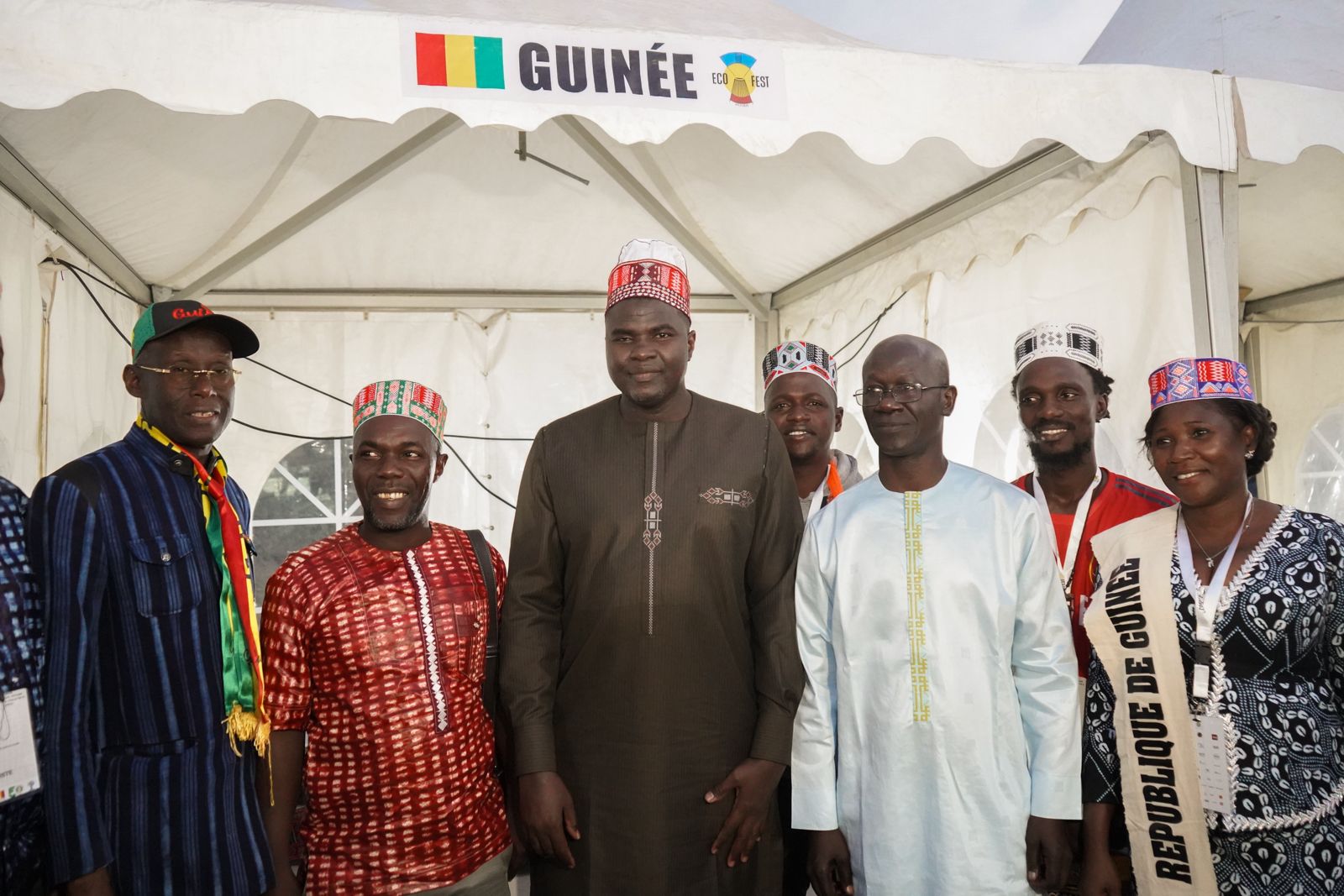
The Innovation and creativity Fair of the festival, that took place at the Place du Souvenir Africain, includes the Pavilion of Heritage and artistic know-how, and the Pavilion of technological Innovation and Digital Creation.
A showcase of digital creations
The attendance by a wide public composed of artists, institutional leaders, exhibition commissioners, young creators, foreign creators and professional culture organizations testify to the strategic importance of this new infrastructure.
While opening the ceremony, the Minister of Culture, Crafts and Tourism, immediately stressed the key role played by ECOWAS and UEMOA. According to him, the commitment of these two institutions to Arts and Culture in West Africa reflects “a resolutely modern vision of culture as an instrument for integration, but also as an economic lever capable of transforming our countries”.
He added that “Culture is not a luxury, it is a vital necessity, especially in a context where our societies are faced with major political, social and security challenges.”
Culture, a solution to political crises
In a speech deeply rooted in the current events in the region, Mr. Amadou Bâ recalled that West Africa is going through a period of political uncertainty, where institutional crises and social tensions often threaten cohesion.
He stressed that “culture is a shield. It enables us to maintain unity, open dialog, create spaces where citizens can recognize and express themselves freely”.
The works exhibited as part of this Innovation and Creativity Fair illustrated the impressive vitality of West African creation. Sculptures, installations, digitally augmented performances, immersive projections and virtual reality creations by artists from Senegal, Mali, Benin, Nigeria, Liberia, Côte d’Ivoire and Burkina Faso revealed the diversity of aesthetics and approaches.
“Our artists are not on the fringes of the world – they are now one of the most powerful driving forces. Many museums and major international art houses now come here to seek this fresh perspective that only Africa can offer,” remarked the Minister.
The new digital pavilions, arranged around the central courtyard of Place du Souvenir, offer state-of-the-art facilities rarely seen on the continent. They include 360-degree immersive rooms, audio-visual laboratories, motion capture studios, digital post-production workshops, digital archive spaces and continuing education centers. These pavilions enable not only to modernize artistic practices, but also to create a genuine digital economy.
The Minister pointed out that “these pavilions are a direct response to the limitations we have been facing for a long time: Lack of exhibition space, scarcity of professional tools, difficulty in accessing the international market”, adding that “digital technology enables us to overcome borders that seemed impassable to overcome yesterday”.
He welcomed the fact that, thanks to this infrastructure, artists from Saint-Louis in Senegal, Bobo-Dioulasso in Burkina Faso, or Cotonou in Benin will be able to showcase their works and sell their creations in New York, Lagos, Tokyo or Paris.
However, the Minister emphasized the persistent challenges prevailing in the cultural sector, including the precarious living conditions of many artists, administrative hurdles, the lack of sustainable funding mechanisms, the dominance of the informal market, and the lack of technical training matching the current demands.
The Minister Amadou Bâ highlighted that “we need to fight the perception of culture as a marginal sector. This sector can create thousands of jobs, structure industries, generate income and strengthen our sovereignty. But this requires ambitious and coherent policies”.