



POLICY STATEMENT 035 BY THE INDEPENDENT MEDIA AND POLICY INITIATIVE (IMPI)
Introduction
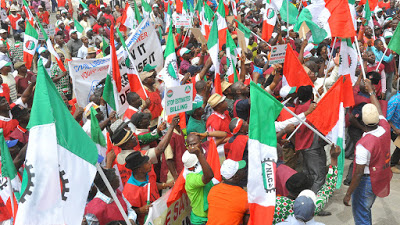
It appears that the leadership of the Nigeria Labour Congress (NLC) is determined to remain stuck in Nigeria’s old economic order.
We, in this regard, reference the recent statement issued by the NLC in which it stridently demanded, among others, the immediate payment of wage award and cost-of-living allowance (COLA) for all workers to cushion the rising cost of living; immediate tax relief for workers, including suspending regressive taxes on low-income earners and taxing the informal sector.
We consider these demands rather curious and insensitive against the background of various policy conceptualisations and their deployment by the Federal Administration to improve the quality of life in the country since the commencement of economic reforms in 2023, and in the face of the United States of America and Israel’s war against Iran.
Oddly enough, this plethora of demands by the NLC was predicated on the recent projections by the Nigeria Economic Summit Group (NESG), signifying that the country may gain an estimated N30 trillion oil windfall from the ongoing Middle East crisis. We consider this proposal rather inappropriate in the context of the age-long principle that admonishes that ‘one cannot eat the seeds and expect to reap a harvest.’
The principle underscores that consuming resources (time, money, talent, etc.) intended for growth prevents future returns, in line with the biblical concept of reaping what you sow. It advises against sacrificing long-term success for short-term gratification.
The oddity of Eating the Seeds and Expecting to Reap a Harvest
Against the thrust of this principle, the implication of the NLC’s demands is an insistence that the Federal Government share with workers the anticipated N30 trillion that may accrue to the federation. However, in our opinion, this N30 trillion, if it truly crystallises as projected, holds the key to galvanising the growth of the Nigerian economy compared to any possible outcome that would be recorded if shared with formal sector workers under the ambit of the NLC.
The fact of the matter is that formal workers represent just about 15 per cent of Nigeria’s total workforce, with over 85 per cent engaged in the informal economy. With a total labour force exceeding 113 million, who will care for the more than 96 million Nigerians in the informal sector if those in the formal sector alone share the anticipated windfall from the Middle East crisis?
We find the NLC’s proposal at this time myopic, especially coming from a workers’ union with a history of engagement with various governments and, ostensibly, an understanding of the undercurrents of the national economy at different times.
We agree, in fact, that since the commencement of hostilities in the Middle East, there has been an increase in the cost of living of Nigerians because of the 34 per cent rise in the pump price of premium motor spirit (PMS) over the last three weeks, with attendant spill-over on the cost of transport and logistics. Nonetheless, we are quick to insist that the historical circumstances that causally enfeeble the Nigerian national economy at the first sign of global oil market disruption no longer obtain in the current form of the Nigerian economy under the President Bola Ahmed Tinubu-led federal administration.
Tracking the History of Oil Price Surges and Associated Inconsequentiality to the Economy
We recall that between 2000 and 2015, there were several global oil price surges, peaking near $ 110 in 2011-2014. However, the increased revenue to the national coffers in those years merely accrued at the expense of domestic petrol scarcity, due to heavy reliance on imports and a corruption-laden subsidy regime. For context, we note that fuel prices rose by more than 90 per cent, from ₦22 to ₦40 per litre, between 2002 and 2003, amid significant supply disruptions across the country.
Again, between 2007 and 2008, due to a global demand surge, crude oil prices hit record highs. This was accompanied by massive fraudulent subsidy payments to petrol importers, which, unfortunately, resulted in large fiscal deficits despite high revenue. This scenario was further reflected between 2011 and 2014 when oil prices skyrocketed again.
We further note that from 2007 to 2008 and between 2011 and 2014, when Nigeria sold oil at around $100 per barrel on average, with resultant high revenue to the federation, increases in poverty, maternal mortality, unemployment, and environmental challenges permeated the nooks and crannies of the country.
As a matter of fact, official data from the National Bureau of Statistics (NBS) showed a rise in the incidence of absolute poverty during this time, moving from approximately 54.4 per cent of the population in 2007, that is 78.6 million Nigerians, to 60.9 per cent in 2010, (about 96.2 million Nigerians). The poverty level increased to about 116.9 million Nigerians in 2012. This reflects a period in which economic growth was often criticised for failing to translate into significant poverty reduction.
This depressing 2002 to 2014 scenario does not compare in the least to the emerging national economic outlook for 2026, in the context of the ongoing global oil price surge, domestic fuel availability, and, most importantly, the extent of the nation’s macroeconomic stability.
Against this backdrop, the projected crude oil and gas windfall is better used to enhance the economic resilience being deliberately nurtured through various federal administration’s policy conceptualisation and deployment.
Indeed, as reviewed below, our analysis of the nation’s critical economic indicators over the last three years demonstrates a fundamental shift in the Nigerian economy.
Changes in the Value and Components of Nigeria’s GDP
In 2015, the year immediately following the years of global crude price surge between 2011 and 2014, rather than increasing, Nigeria’s GDP declined from a high of $576 billion in 2014 to approximately $494.31 billion (at current prices) in 2015. Distressingly, the economy grew by 2.35 per cent in real terms (year-on-year) during the second quarter of 2015, marking a slowdown from 6.54 per cent growth in the same quarter of 2014, a manifestation of an economy lacking resilience despite the huge accruals as a result of revenue earned during the oil boom years.
The dismal turn of the nation’s economy, as recorded from the second quarter of 2015, when Nigeria’s real GDP grew by 2.35 per cent year-on-year, from the initial low of 3.96 per cent growth in the first quarter of 2015, was a clear indication of a badly managed economy as the then federal administration exited presidential power.
In contrast to that era, Nigeria’s GDP figure, after an integrity-driven rebasing, reached N441.53 trillion in 2025, an increase of N68.71 trillion, or 18.43 per cent, from the preceding year. In dollar terms, nominal GDP rose to approximately $308 billion, up from $241 billion in 2024, a $67 billion recovery. This shows a growth momentum in the economy and marks the first positive increase in Nigeria’s dollar GDP since 2019, when the economy stood at $569 billion.
We note the significant gap between $308 billion and $569 billion. However, the 2025 GDP increase is indicative of the economy’s upward trajectory under the current federal administration.
More impressive is that compared to the period when the petroleum sector determines the weight and substance of the GDP, there is a clear evidence that the real GDP acceleration is now supported by non-oil sectors including solid minerals, transport, financial services, telecom, and manufacturing, through the concentration of nominal gains in six sectors; real estate, trade, telecoms, financial institutions, construction, and crop production, which together account for 69 percent of the N68.71 trillion increase.
More than any other intervening considerations, the consequential nature of the macroeconomic stability which the federal government has continued to sustain should be acknowledged and analysed.
Analysis of Consequential Impact of Nigeria’s Macroeconomic Stability: Price stability/FX Liquidity/Equity Market Appreciation:
The decline in inflation from a high of 34.6 per cent in November 2024 to 15.06 per cent by February 2026 is considered the most consequential macroeconomic development of the Federal Administration’s reform cycle. In addition, the Naira appreciated by over five per cent in 2025, underscored by the narrowing of the FX premium to between 0.5 and 3 per cent. This signals a new transaction range between the official and parallel markets. It also underpins the real sector recovery.
By our estimation, the foreign exchange market liquidity has been remarkable. The country’s gross external reserves have surpassed the $50 billion mark, reaching their highest level in over 13 years, while net foreign reserves increased from $4 billion in 2023 to over $34.8 billion at the end of 2025, a nearly nine-fold increase.
This is just as the equity market capitalisation crossed N130 trillion on March 17, 2026, more than tripling its level in 2023, with the benchmark All Share Index settling at 202,559.41 basis points on the same day. It is agreed that this reflects structural improvements in reserve adequacy, exchange rate credibility, and capital market activity.
Consequently, investors in Nigeria are in a cheery mood. The equity market made a 30 per cent year-to-date return in the first quarter of 2026. As a result, the Nigerian bourse is currently the second-best-performing market globally, trailing only South Korea, which grew 44.3 per cent. We note that the NGX’s record-breaking run is not just about luck. A combination of domestic policy and corporate health is driving the equity market surge.
Impacting the Micro Segments of the Economy
Our follow-up study of the Federal Government’s microeconomic stimulus indicates a range of programmes and policies deployed to transform Nigeria from the economic docility of years of fuel subsidy dependency and import consumerism to enabling citizens to be productive through various levels of empowerment.
One of such empowerments was the flag-off of the $500 million World Bank-funded Sustainable Power and Irrigation for Nigeria (SPIN) Project. The project aims to accelerate food production and increase power generation as part of a strategic intervention to strengthen dam safety and water resources management for improved irrigation and hydropower generation.
Directly connected to this is the Federal Government’s approval of a N250 billion facility for the Bank of Agriculture (BOA) to support smallholder farmers across Nigeria, offering them access to credit at a single-digit interest rate, and in the same token, releasing 2.15 million bags of fertiliser to support farmers to boost food production across the country. The move aims to lower production costs, boost yields, and strengthen Nigeria’s food supply chain. The intervention will help reduce farmers’ production costs.
Meanwhile, in another intervention targeted at boosting food production and reducing poverty, the Federal Government has launched an interest-free, collateral-free loan scheme targeting at least 22,000 farmers across the 774 local government areas of the country. The initiative, under the FarmerMoni Dry and Wet Season Programme, is being implemented by the National Social Investment Programme Agency (NSIPA) as part of the Renewed Hope Government Enterprise and Empowerment Programme (GEEP 3.0).
To ensure increased food production, the Federal administration is currently implementing the GROW Fund to provide affordable financing for over 6,000 young entrepreneurs trained under the Inspire, Create, Start and Scale programme, in a move aimed at tackling the persistent funding gap confronting micro, small and medium enterprises in Nigeria.
In addition, agricultural mechanisation has taken a pride of place, as the federal government is currently deploying 2000-plus tractors and 10,000-plus implements through a public-private partnership (PPP) arrangement, focusing on a 40 per cent subsidised lease-to-own model for smallholder farmers.
To support the sub-nationals’ delivery on infrastructure, the federal administration has disbursed more than N2.45 trillion to federating States. The amount disbursed between March 2024 and August 2025, spanning over 17 months, was aimed at bolstering infrastructure development and strengthening subnational security operations, as part of ongoing efforts to address widespread insecurity and bridge critical infrastructure gaps across the country.
In addition, it is appropriate to put on record that the Federal Administration has commenced the payment of the tax-free Consolidated Academic Tools Allowance (CATA) to university academics across the country, in fulfilment of the agreement reached between the Federal Government and university lecturers. The allowance, which ranges from a little over N1 million annually for graduate assistants and assistant lecturers to over N3 million for professors, is expected to increase university teachers’ take-home pay.
The Consolidated Academic Tolls Allowance (CATA) is a specific financial component of the salary structure for University Academic Staff in Nigeria. The Tinubu administration introduced it as a job-specific, tax-exempt allowance that supports the core research, teaching, and intellectual activities of university academics. It is the first time such a policy is being implemented in Nigerian universities. It has helped mitigate the perennial industrial actions that were the lot of Federal Government-owned universities over the years.
We also note that the Transmission Company of Nigeria (TCN) is implementing transmission projects worth over $1.3 billion nationwide, funded by multilateral partners, to boost grid capacity and strengthen power delivery. The projects aim to improve wheeling capacity, reinforce weak corridors, and modernise critical grid infrastructure across the country. The successful delivery of these transmission projects nationwide will have positive implications for the cost of doing business, the quality of life, and the standard of living of Nigerians.
We further acknowledge the intentional policy of enabling a credit economy to facilitate asset acquisition through the Nigerian Consumer Credit Corporation (CREDICORP). In just one year of operations, CREDICORP has disbursed over N37 billion in consumer credit to more than 200,000 Nigerians, with over half of them accessing formal credit for the first time.
To scale capacity and professional capability, the Federal Government of Nigeria has launched a nationwide free training program for 10 million Nigerians on financial inclusion and literacy. The training is designed to equip Nigerians, particularly women and youths, with essential financial skills, investment knowledge, and digital competencies for sustainable wealth creation through the facilitation of six professional bodies, which will jointly design training programmes, certification pathways, digital skills initiatives, and mentorship platforms that would strengthen Nigeria’s financial and enterprise workforce.
The professional bodies include the Institute of Chartered Accountants of Nigeria (ICAN); Chartered Institute of Bankers of Nigeria (CIBN); Chartered Institute of Stockbrokers (CIS); National Institute of Credit Administration (NICA); Chartered Risk Management Institute (CRMI), and Nigeria Institute of Innovation and Entrepreneurship (NIIE).
Meanwhile, a significant indicator of an economy’s strength is the financial performance of companies listed on the nation’s stock market.
Listed companies on the Nigerian Stock Exchange have reported higher-than-expected earnings, underscoring the rebound of many firms, with about N1.7 trillion in dividends declared to shareholders.
As of March 13, a total of 21 listed companies on the Nigerian Exchange Limited (NGX) have announced dividends for 2025, amounting to N1.7 trillion, as corporate earnings more than doubled. The combined revenue of the companies analysed rose to approximately N13.44 trillion in 2025, from N9.76 trillion in 2024, while profit increased to N3.17 trillion, compared with the N571 billion recorded a year earlier.
Contrary to the demands of the NLC, asking for tax relief for workers, including suspending regressive taxes on low-income earners and taxing the informal sector, it is imperative to remind Labour that under new tax laws, which became effective from January 1, 2026, individuals earning an annual income of ₦800,000 or less are fully exempt from personal income tax (PAYE). This, along with other reliefs in the Nigeria Tax Act 2025, ensures that most minimum-wage earners retain their full earnings.
Necessities such as food, education, healthcare, and electricity are exempt from VAT. At the same time, a new system provides rent relief, calculated as the lower of N500,000 or 20 per cent of the annual rent paid. Small businesses are now exempt from Company Income Tax (CIT). These reforms aim to provide immediate relief for low-income households and individuals.
Effective from January 1, 2026, retiring federal civil servants are entitled to a gratuity equal to 100 per cent of their total annual emolument under the Exit Benefit scheme. This is in addition to the 20 per cent and 28 per cent consequential increases in pension for retirees under the Contributory Pension Scheme (CPS), as well as the introduction of a N35,000 monthly increment for all CPS retirees. This marks a significant milestone in the Federal Government’s commitment to strengthening the welfare framework of the civil service.
We request the NLC to take cognisance of this unprecedented pension support policy for CPS retirees who have been abandoned by government since 2004.
More impressively, the federal government has intervened in the country’s rent crisis with housing solutions focused on renters who now spend a significant part of their income on house rent. One of the housing solutions the government has introduced is the Rent-to-Own scheme, which allows eligible Nigerians to move into homes while paying monthly instalments towards eventual ownership. The scheme will offer practical housing solutions for urban workers and young families grappling with rising rents and limited access to mortgages.
Conclusion
We have highlighted some of the policies and social interventions above as a gentle reminder to individuals and institutions, such as the NLC, of the proactive, Federal Government led ongoing initiatives to mitigate and contain a possible increase in the cost of living.
However, we place great emphasis on the Federal Government’s fervent restructuring of the national economy to ensure improved production capacity, wealth creation, inclusive economic growth, and poverty reduction.
Omoniyi M. Akinsiju, PhD
Chairman, Independent Media and Policy Initiative (IMPI)
March, 2026